photo of doctor
Back to Health Topics page

Influenza


Information about avian influenza (bird flu) can be found on the CDC website at www.cdc.gov/flu/avian

Flu Vaccine Information for 2007

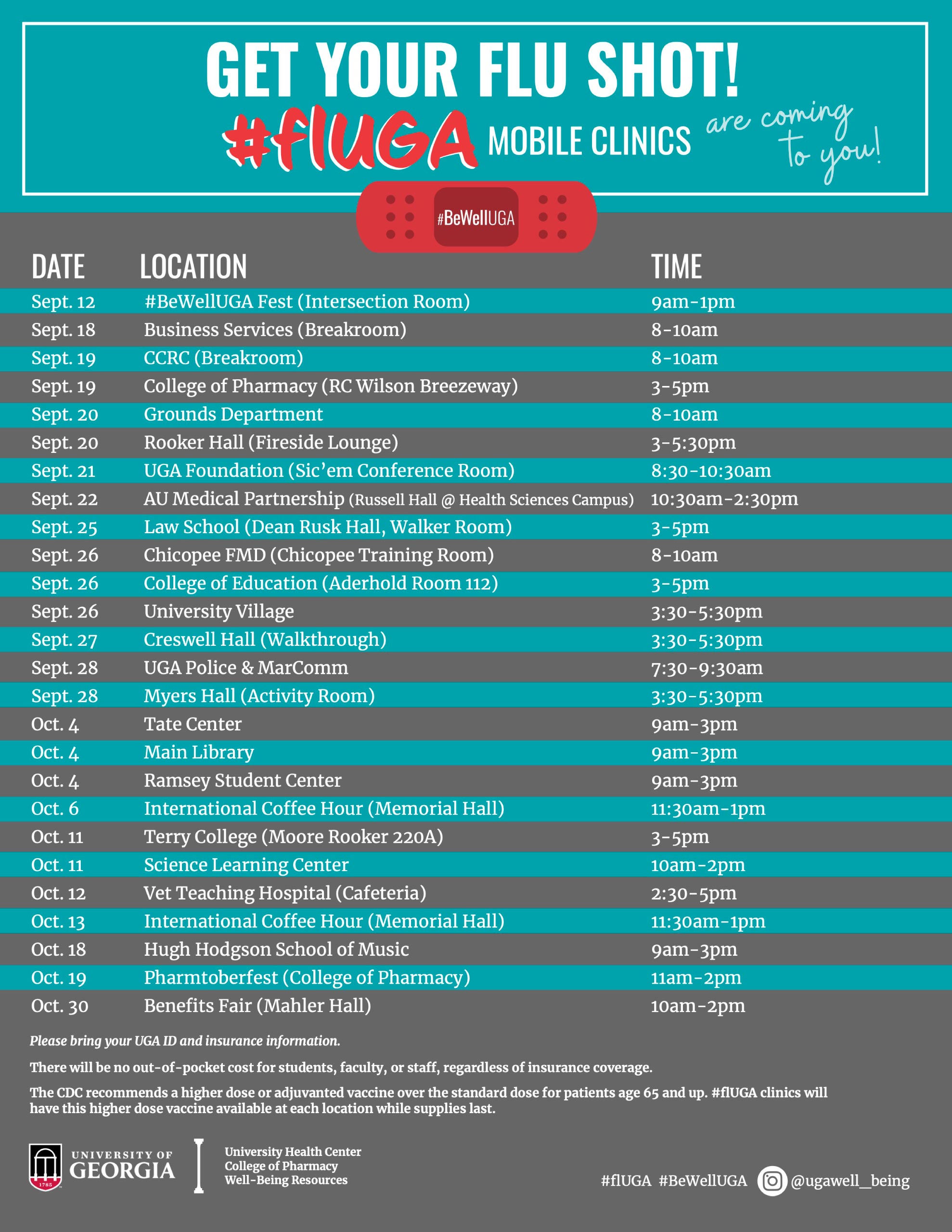
Flu shots will be offered to students, faculty/staff and faculty emeritus by appointment Tue - Thu from 10:00 am - 4:00 pm beginning October 23. Valid UGA ID is required.

Call the Allergy/Travel Medicine Clinic at 706-542-5575 to make an appointment. Students can also book online. Recipients must first stop at the Registration Desk before getting the flu shot if not already an established patient.

Cost is $12 for UGA Fees Paid students and $25 for Non-Fees Paid students, faculty/staff and faculty emeritus. Payment can be made by cash, check, Bulldog Bucks, or debit/credit cards. A receipt will be provided for insurance filing purposes if desired.

Take our cold and flu quiz
What is influenza?
Can anyone get the flu?
How is the influenza virus passed around?
How do you know if you have the flu?
What should you do if you get the flu?
What is the myth of the "stomach flu"?
Is it a cold or is it the flu?

Influenza (Flu): The Disease

What is influenza?
Influenza (the flu) is a contagious disease that is caused by the influenza virus. It attacks the respiratory tract in humans (nose, throat, and lungs). The flu is different from a cold. The flu usually comes on suddenly and may include these symptoms: fever, headache, tiredness (can be extreme), dry cough, sore throat, nasal congestion, body aches. These symptoms are usually referred to as "flu-like symptoms."

Can anyone get the flu?
Anyone can get the flu, but the disease is more severe for some people. Most people who get the flu will recover in 1 to 2 weeks, but some people will develop life-threatening complications (such as pneumonia) as a result of the flu. Millions of people in the United States - about 10% to 20% of U.S. residents - will get the flu each year. An average of about 20,000 people per year in the United States die from the flu, and 114,000 per year have to be admitted to the hospital as a result of influenza. Serious problems from flu can happen at any age. People > 65 years old, people of any age with chronic medical conditions, and very young children are more likely to get complications from flu. Pneumonia, bronchitis, and sinus and ear infections are three examples of complications from flu. The flu can make chronic health problems worse. For example, people with asthma may experience asthma attacks while they have the flu, and people with chronic congestive heart failure may have worsening of this condition that is triggered by the flu.

How is the influenza virus passed around?
The flu is spread, or transmitted, when a person who has the flu coughs, sneezes, or speaks and sends flu virus into the air, and other people inhale the virus. The virus enters the nose, throat, or lungs of a person and begins to multiply, causing symptoms of the flu. Flu may, less often, be spread when a person touches a surface that has flu viruses on it - a door handle, for instance - and then touches his or her nose or mouth. The Flu Is Contagious. A person can spread the flu starting one day before they feel sick. Adults can continue to pass the flu virus to others for another 3-7 days after symptoms start. Children can pass the virus for longer than 7 days. Symptoms start 1-4 days after the virus enters the body. Some persons can be infected with the flu virus but have no symptoms. During this time, those persons can still spread the virus to others.

How do you know if you have the flu?
Your respiratory illness might be the flu if you have sudden onset of body aches, fever, and respiratory symptoms, and your illness occurs during November through April (the usual flu season in the Northern Hemisphere). However, during this time, other respiratory illnesses can cause similar symptoms and flu can be caught at any time of the year. It is impossible to tell for sure if you have the flu based on symptoms alone. Doctors can perform tests to see if you have the flu if you are in the first few days of your illness.

What should you do if you get the flu?

  • Take medication to relieve the symptoms of flu.
  • Drink plenty of liquids
  • Avoid using alcohol and tobacco.
  • Rest

A virus causes influenza, so antibiotics (like penicillin) don't work to cure it. Antiviral medications have been shown to decrease the severity of the illness and duration of symptoms by 1 - 1 1/2 days. These medications are primarily used for people at high risk for complications of influenza. High risk people are those with chronic diseases or are over age 65.

The best way to prevent the flu is to get an influenza vaccine (flu shot) each fall, before flu season. Never give aspirin to children or teenagers who have flu-like symptoms - and particularly fever - without first speaking to your doctor. Giving aspirin to children and teenagers who have influenza can cause a rare but serious illness called Reye syndrome. Children or teenagers with the flu should get plenty of rest, drink lots of liquids, and take medicines that contain no aspirin to relieve symptoms.

What is the myth of the "Stomach Flu"?
Many people use the term "stomach flu" to describe illnesses with nausea, vomiting, or diarrhea that are not caused by the flu virus, but can be caused by many different viruses, bacteria, or even parasites. However, while vomiting, diarrhea, and being "sick to your stomach" can sometimes be related to the flu - particularly in children - these problems are rarely the main symptoms of influenza. The flu is a respiratory disease and not a stomach or intestinal disease.

IS IT A COLD OR IS IT THE FLU?
Common Symptoms Cold Flu
Fever Rare Characteristic, high (102°-104°F; lasts 3-4 days)
Headache Rare Prominent
General aches, pains Slight Usual; often severe
Fatigue, weakness Quite mild Can last up to 2-3 weeks
Extreme exhaustion Never Early and prominent
Stuffy nose Common Sometimes
Sneezing Usual Sometimes
Sore throat Common Sometimes
Chest discomfort, cough Mild to moderate; hacking cough Common; can become severe
Complications Sinus congestion or earache Bronchitis, pneumonia; can be life-threatening
Prevention No vaccine or preventive medications; handwashing, plenty of rest and good nutrition will help prevent the common cold Annual vaccination; antiviral medicines--see your doctor
Treatment Only temporary relief of symptoms Antiviral medicines--see your doctor
From the National Institute of Allergy and Infectious Diseases